Cataract
Understanding Cataracts: When Cloudy Vision Doesn't Have to Be Your Future

Dr Minak Bhalla
"Everything just seems cloudy lately," my patient told me during her consultation. "Like I'm looking through a foggy window. At first, I thought I just needed stronger glasses, but that didn't help. Now driving at night is becoming difficult—the headlights from other cars seem so glaring."
She was describing cataracts perfectly. It's a conversation I have several times a week and it always begins the same way: gradual changes that people initially dismiss, hoping new glasses will solve the problem. But cataracts aren't a glasses problem—they're a lens problem.
24 million
People in the UK over 40 have cataracts
95%
success rate for cataract surgery
What Exactly Is a Cataract?
Inside your eye, just behind the iris (the colored part), sits a remarkable structure called the crystalline lens. This lens is normally clear, allowing light to pass through and focus on your retina. Think of it as a transparent disc, beautifully engineered to bend light precisely.
A cataract occurs when this normally clear lens becomes cloudy or opaque. It's rather like looking through a dirty or frosted window—light cannot pass through cleanly, resulting in blurred, dimmed, or distorted vision.
The lens is made primarily of water and proteins arranged in a precise pattern that maintains clarity. As we age, these proteins can clump together, clouding small areas of the lens. Over time, these cloudy areas typically enlarge, making it increasingly difficult to see clearly.
Why Do Cataracts Develop?
Age is by far the most common cause. Age-related cataracts are so prevalent that some ophthalmologists consider them an inevitable part of aging if you live long enough. By age 80, more than half of people either have a cataract or have had cataract surgery.
However, age isn't the only factor. Cataracts can also develop due to:
Genetics: Some people are simply predisposed to developing cataracts earlier
Diabetes: High blood sugar levels can accelerate cataract formation
Prolonged Steroid Use: Certain medications, particularly steroids, increase risk
Eye Injury or Surgery: Trauma can trigger cataract development, sometimes years later
UV Exposure: Excessive sun exposure over a lifetime may contribute
Smoking: Significantly increases cataract risk
Previous Eye Inflammation: Conditions like uveitis can lead to secondary cataracts
Rarely, babies can be born with cataracts (congenital cataracts), or they can develop in children and young adults due to genetic conditions, infections, or metabolic disorders.
Recognizing the Symptoms
Cataracts typically develop slowly and early on, you might not notice any changes. As they progress, you may experience:
Cloudy or Blurred Vision: Like looking through a foggy window
Difficulty with Night Vision: Particularly troublesome when driving
Sensitivity to Light and Glare: Headlights, lamps, or sunlight seem excessively bright or have halos around them
Fading Colors: Colors appear less vibrant, with yellowing or browning of vision
Frequent Prescription Changes: Your glasses or contact lens prescription changes more often
Double Vision: Seeing multiple images in one eye (less common)
Interestingly, some people experience temporary improvement in their near vision in the early stages—a phenomenon called "second sight." This occurs because the changing lens temporarily improves close-up focus, but it's short-lived and not a reason to delay treatment.
When should you be concerned?
If visual changes are affecting your daily activities—reading, driving, recognizing faces, or enjoying hobbies—it's time for an evaluation. You don't need to wait until your vision is severely impaired.
The Different Types of Cataracts
Not all cataracts are the same. The type depends on where the clouding occurs in the lens:
Nuclear Cataracts form in the center (nucleus) of the lens and are most commonly associated with aging. They typically cause gradual yellowing and hardening of the lens, progressively affecting distance vision. Many patients notice difficulty with night driving as an early symptom.
Cortical Cataracts begin at the outer edge of the lens (the cortex) and work inward, creating spoke-like opacities. They often cause problems with glare and can affect both distance and near vision.
Posterior Subcapsular Cataracts form at the back of the lens, directly in the path of light. These progress more rapidly than other types and significantly affect reading vision and vision in bright conditions. They're more common in younger patients, those with diabetes, or those taking steroids.
Can Cataracts Be Prevented?
While you cannot completely prevent age-related cataracts, certain measures may slow their development:
Protect your eyes from UV light with quality sunglasses
Maintain good control of diabetes if you have it
Eat a diet rich in antioxidants (fruits and vegetables)
Quit smoking
Limit alcohol consumption
Have regular eye examinations to detect cataracts early
Despite suggestions about supplements or eye drops preventing cataracts, there is currently no proven medical treatment to prevent or reverse them once they develop. Surgery remains the only definitive treatment.
When Is It Time for Surgery?
This is one of the most common questions I'm asked. The answer isn't based solely on how "bad" your cataract looks to me—it's based on how much it's affecting your life.
You should consider surgery when:
Your vision loss interferes with daily activities
You no longer meet driving standards
You're having difficulty reading, watching television, or pursuing hobbies
Glare is affecting your quality of life
Falls or accidents are occurring due to poor vision
The cataract is causing other problems (such as inflammation or glaucoma)
There's no need to wait until your cataract is "ripe" or until you can barely see. In fact, modern cataract surgery is easier and safer when performed before cataracts become extremely dense. We operate when you feel your vision is limiting you, not according to an arbitrary severity scale.
What to Expect from Modern Cataract Surgery
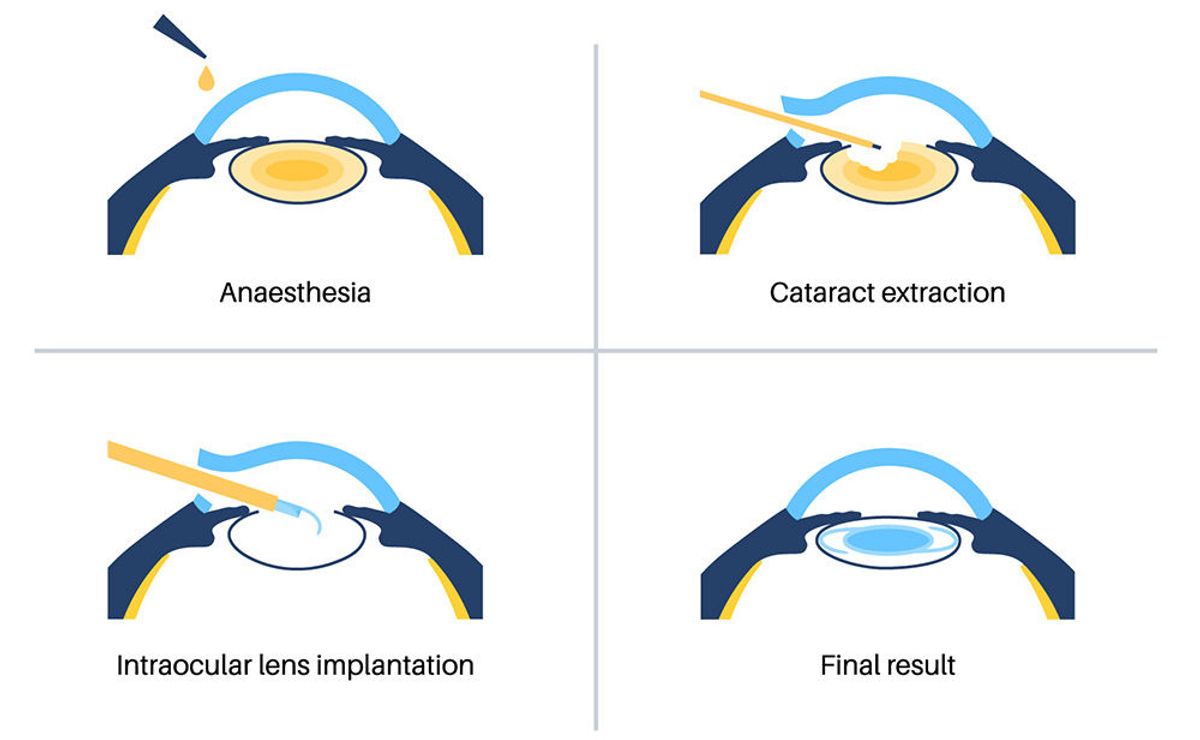
Cataract surgery is one of the most successful procedures in all of medicine. It's typically performed as a day case under local anaesthetic, taking about 15-20 minutes per eye.
Using a technique called phacoemulsification, I make a tiny incision (typically 2-3mm) and use ultrasound energy to break up and remove the cloudy lens. The lens is then replaced with a clear artificial intraocular lens (IOL) that will remain in your eye permanently.
The beauty of modern surgery is that you can choose the type of lens that best suits your lifestyle. Options include:
Monofocal Lenses: Provide excellent vision at one distance (typically distance), with glasses for reading
Extended Depth of Focus (EDOF) Lenses: Offer good vision from distance through to intermediate range
Multifocal Lenses: Designed to provide vision at multiple distances, reducing glasses dependence
Trifocal Lenses: Provide clear vision at near, intermediate and far distances
During your consultation, we'll discuss your visual needs, lifestyle and expectations to determine which lens is right for you.
Recovery and Results
Most patients notice improved vision within days, though complete healing takes several weeks. You'll use prescribed eye drops and attend follow-up appointments to ensure proper healing.
The results can be truly life-changing. Patients often tell me they hadn't realized how much their vision had deteriorated until after surgery. Colors appear more vibrant, contrast is sharper and activities that had become difficult are suddenly enjoyable again.
Remember:
Cataracts are a natural part of aging for most people, but they don't have to diminish your quality of life. With modern surgical techniques and advanced lens options, clearer vision is achievable.
The Bottom Line
If you're experiencing cloudy vision, difficulty with glare, or fading colors, cataracts may be the cause. But here's the good news: unlike many age-related conditions, cataracts are eminently treatable with excellent outcomes.
You don't have to accept declining vision as an inevitable part of aging. With proper evaluation and treatment, you can restore clear, vibrant vision and return to the activities you love.
The world doesn't have to look foggy. Let's clear your view.
Ready to See Clearly Again?
Schedule a comprehensive cataract evaluation today