Emergency Care
5 common causes of dry eye and what to do about them

Dr Minak Bhalla
Dry eye is one of the most common eye conditions seen in clinical practice, affecting an estimated 5 to 50% of people worldwide depending on age and lifestyle factors and rates are thought to be rising with increased use of digital devices. Dry, irritated and gritty eyes can be a common phenomenon but these symptoms should not be simply ignored as a normal part of everyday life if they persist for a prolonged time. Dry eye occurs when the eyes do not produce enough tears, or when the tears evaporate too quickly to keep the surface of the eye adequately lubricated. Persistent symptoms of dry eye can affect comfort and vision if left untreated. Understanding the causes of dry eye is important to manage it effectively.
What is Dry Eye Disease?
Dry eye disease is a common condition resulting from tear film dysfunction. Tears are essential for keeping the surface of the eye lubricated and protected from irritation. When tear production decreases or tears evaporate too quickly, the eyes are unable to maintain a healthy and stable tear film. Thus the surface of the eye becomes poorly lubricated and inflamed. This can cause persistent discomfort in the eye and disturbances in vision.
Signs and symptoms of dry eyes
Dry eye symptoms can range from mild irritation to significant vision problems. Symptoms may include-
•Burning and stinging in the eyes
•Gritty eyes, stringy mucus may be present around the eyes
•Redness of the eyes
•Excessive watery eyes as response to the irritation
•Sensation of having something trapped in eyes
•Difficulty wearing contact lenses
•Sensitivity to light
•Blurry vision
•Eye fatigue
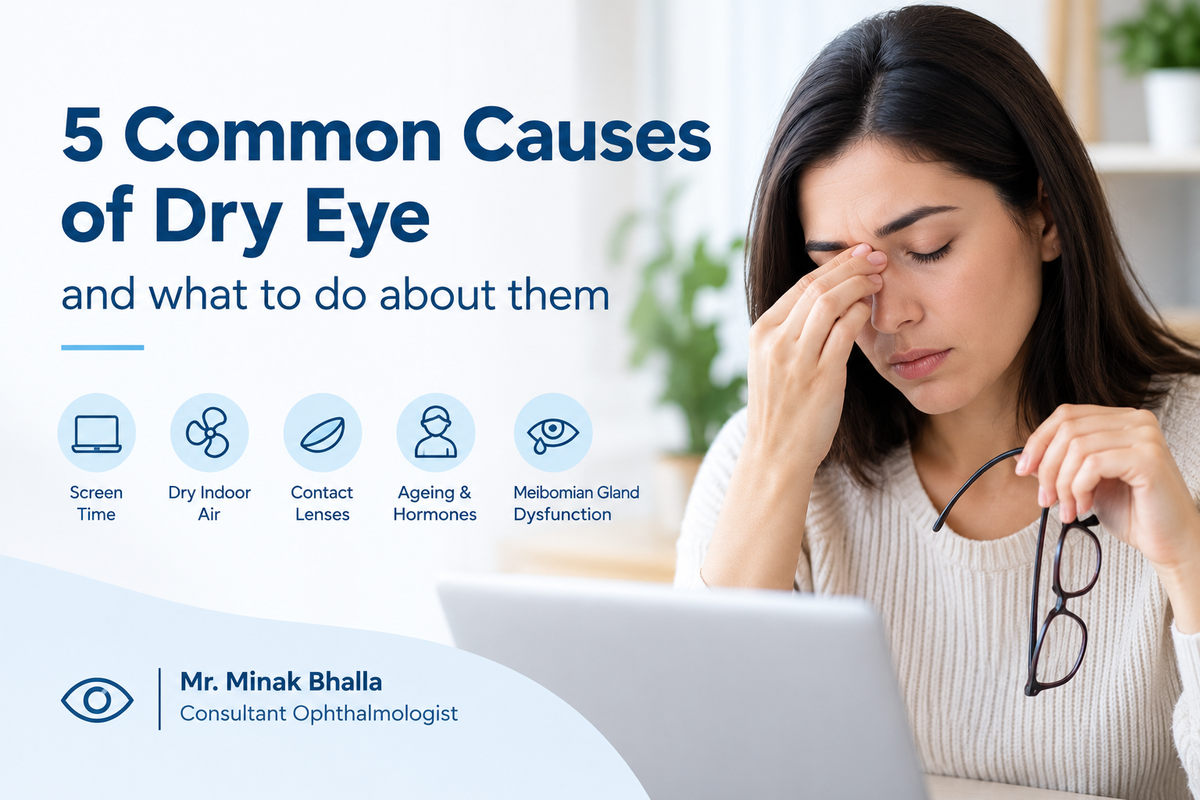
Five common causes of dry eye
Prolonged screen time
Spending long periods looking at computers and smartphones can cause dry eyes. When people concentrate on screens, they blink less frequently and may not completely close their eyelids with each blink. This may lead to tears evaporating from the surface of the eye more quickly. Beyond temporary dryness, research suggests that habitual incomplete blinking during prolonged screen use may also affect the meibomian glands in the eyelids over time, contributing to a more persistent form of dry eye known as meibomian gland dysfunction.
What to do
To prevent dry eyes from prolonged screen time, follow the 20-20-20 rule. Every 20 minutes, look at something 20 feet away for 20 seconds while blinking frequently and fully. Position the screen slightly below your eye level and take regular breaks in between long hours of screentime.
Air conditioning, heating and wind
The surroundings around you can have a significant effect on the tear film of your eye. Spending several hours in an air conditioned or heated environment may leave the eyes feeling dry and gritty. These environments can reduce humidity, while fans and windy weather can increase the rate of tears evaporating from the eye.
What to do
Avoid direct exposure of eyes from air from fans and air conditioning vents. Using a humidifier can help to increase moisture in particularly dry indoor environments. When outdoors, glasses and sunglasses can protect the eyes against wind, dust and other irritants.
Use of contact lens
Wearing contact lenses for extended periods can contribute to dry eye. Because a contact lens sits on the surface of the eye, it can affect the tear film and may lead to increased tear evaporation. Wearing lenses for longer than recommended, poor lens hygiene and sleeping in lenses which are not designed for overnight use can increase the risk of irritation in the eyes. Using lenses beyond their replacement schedule can also cause eye irritation.
What to do
Clean and replace the lens regularly according to the instructions provided by your eye-care professional. Avoid wearing contact lenses for longer than recommended and give your eyes regular breaks by switching to glasses when appropriate. You may consider using different lens material, a different wearing schedule if problems persist with the use of your current lens. If you experience persistent dryness with your current lenses, switching to daily disposable lenses may help, as they avoid the build-up of protein and lipid deposits that can disrupt the tear film and increase irritation. Discuss lens material and wearing schedule with your eye care professional.
Ageing and hormonal changes
The risk of dry eye tends to increase with age because the stability of tear film and the production of tears can change over time. Hormonal changes can also play a significant role in tear production and composition of the tear film. Therefore dry eye becomes more noticeable around menopause in women. While dry eye becomes particularly noticeable around the menopause in women due to shifts in oestrogen and androgen levels, the risk also rises with age in men. Meibomian gland dysfunction, a leading cause of evaporative dry eye, is estimated to affect up to 70% of men over the age of 60.
What to do
Persistent dryness should be assessed rather than being dismissed as simply age-related. Regular eye examinations are recommended to older adults. During the examination your ophthalmologist can assess the tear film and the surface of the eye to look for signs of inflammation and other conditions that can contribute to your dry eye symptoms. Depending on the cause and severity, different treatment approaches can be recommended including lubricating eyedrops, lifestyle modifications or other treatments recommended by your consultant ophthalmologist.
Meibomian gland dysfunction
Healthy tears contain an oily layer that helps to slow down the evaporation of tears. The oil is produced by tiny glands in the eyelids called meibomian glands. When these glands become blocked or do not function properly, the oily component of the tear can reduce, resulting in rapid evaporation of tears. This can lead to dry, irritated eyes. Some people may also experience crusting around the eyelashes which becomes worse towards the end of the day.
What to do
Depending on the severity of your condition, your ophthalmologist may recommend home care measurements such as warm compressed and eyelid hygiene to help maintain the function of the meibomian glands. In some cases lubricating eyedrops or other anti-inflammatory medications can be a more effective approach. If these treatments fail to manage dry eye, In-clinic procedures such as meibomian gland expression, thermal pulsation therapy and intense pulsed light therapy are used in private practice settings for meibomian gland dysfunction. While evidence for these treatments continues to develop, warm compresses and eyelid hygiene remain the recommended first-line approach, with in-clinic options considered where initial measures have not provided sufficient relief.
When to consult an ophthalmologist?
Occasional and symptoms of dry eyes may improve with lifestyle modifications and home care, but persistent or worsening symptoms deserve medical attention. If you are regularly experiencing burning gritty eyes, redness or light sensitivity you should consider a professional eye examination. An ophthalmologist can assess the stability of your tear film, the production of tear and examine the surface of your eye to identify the potential cause of dry eye. There is no treatment that is one-size-fits-all, so the best approach should be decided by an experienced consultant ophthalmologist based on the type and severity of your condition.
Consider an appointment with an experienced consultant ophthalmologist in Sudbury Hill
If prolonged eye irritation and dry, gritty eyes are getting in the way of comfort in your daily life, you can arrange an appointment with Dr. Minak Bhalla. He is a consultant ophthalmologist in The Clementine Churchill Hospital in Sudbury Hill with over 10 years of experience in specialised medical and surgical procedures including cataract and glaucoma surgery. He offers meibomian gland dysfunction therapy, recurrent corneal erosion treatment and dry eye care that can help your eyes regain their natural hydration.
Dr. Bhalla completed his ophthalmological training at Moorfields Eye Hospital, Royal Free Hospital, and Western Eye Hospital, where he developed exquisite skills in advanced surgical procedures.
Get your appointment today at The Clementine Churchill Hospital Sudbury Hill, Harrow HA1 3RX or The London Clinic, 119 Harley Street, London W1G 6AU.