Glaucoma
MIGS vs Traditional Glaucoma Surgery: Key Differences

Dr Minak Bhalla
Glaucoma is a group of eye conditions characterised by gradual damage to the optic nerve, often associated with raised intraocular pressure(IOP). Commonly known as the “Silent thief of sight”, glaucoma can often develop without noticeable symptoms in early stages and can lead to irreversible vision loss if left untreated. The treatment of glaucoma often focuses on managing the raised intraocular pressure and preventing further worsening of vision.
The appropriate treatment of glaucoma is chosen based on various factors such as the type and severity of glaucoma, the target eye pressure, the individual's overall eye health and response to treatment. For some individuals, eye drops or laser treatment may be effective. However, if these options fail to control the intraocular pressure (eye pressure) adequately, surgery may be considered by the consultant ophthalmologist. Even though traditional glaucoma surgery like trabeculectomy is an effective approach to manage glaucoma, recently MIGS (minimally invasive glaucoma surgery) has erupted as a newer alternative to the traditional surgery. While both surgery options aim to lower the elevated intraocular pressure and prevent further damage to the optic nerve, they differ in how they work, how invasive they are and how much eye pressure they can effectively reduce.
What is MIGS?
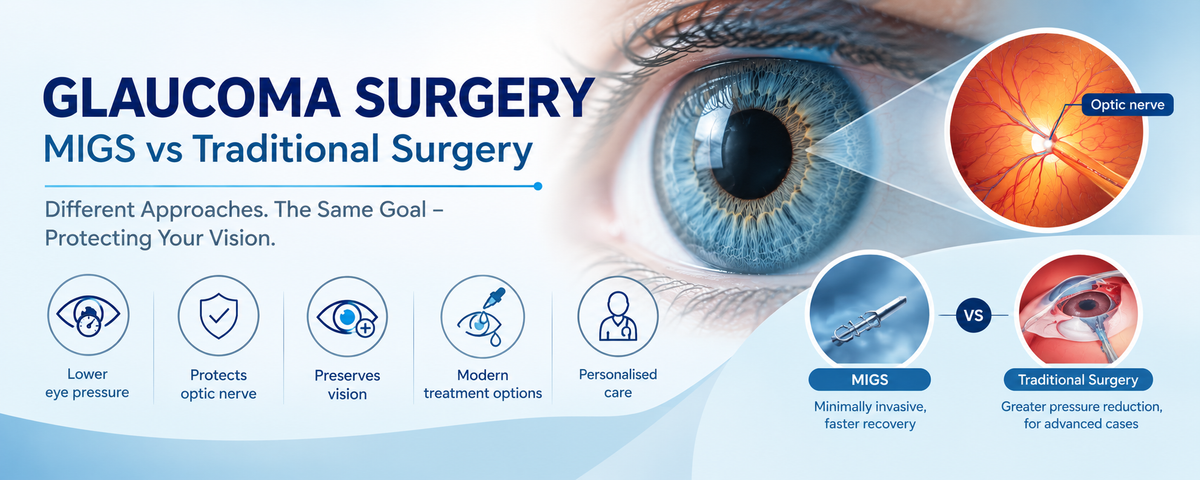
MIGS(Minimally invasive glaucoma surgery) refers to a group of procedures designed to lower intraocular pressure using microscopic devices or implants through very small incisions. Rather than creating a large new drainage pathway like in traditional glaucoma surgery, MIGS improves the existing drainage system of the eye by enhancing the outflow of aqueous fluid. Various modern specialised devices like Hydrus microstent, iStent, Omni surgical system are used in this surgery.
What is traditional glaucoma surgery?
Established surgical procedures such as trabeculectomy and aqueous shunt surgery are widely considered the traditional glaucoma surgery options. Traditional surgery aims to reduce the intraocular pressure by creating a new route for aqueous fluid to drain from the eye, instead of improving the existing drainage channels. Because it can achieve a larger reduction in intraocular pressure, it is recommended when glaucoma is advanced or a very low eye pressure is targeted. However, traditional glaucoma surgery options are more invasive than the MIGS procedures.
How invasive is the procedure?
The surgical approach is the main difference between the MIGS and traditional glaucoma surgery.
MIGS procedures generally use small incisions in the eye and microscopic implants, aiming to minimise disruption to the eye’s tissues.
Traditional surgery options such as trabeculectomy create a new drainage path and manipulates the eye tissues, thus is considered more invasive.
How much can they lower intraocular pressure?
MIGS can achieve a meaningful amount of pressure reduction required to prevent further damage to the optic nerve. But its pressure lowering effect is generally more modest than that of trabeculectomy.
Traditional surgery can lower the intraocular pressure more significantly and therefore remains a more suitable approach when stronger pressure control and lower target pressure are aimed.
Recovery and follow-up
MIGS has a shorter and easier recovery process with a lower risk profile compared to invasive glaucoma surgery. Recovery from MIGS usually takes around one to two weeks, although it may vary between individuals and the procedure used. Regular follow-ups are recommended to check eye pressure and the healing process after the surgery.
Traditional glaucoma surgery needs more intensive post-operative monitoring. They require several post-operative visits to monitor the filtering bleb, eye pressure and healing. The recovery may take up to several weeks, although it can take a few months for the eye to stabilise. Strenuous activities and heavy lifting may need to be avoided temporarily, if advised by the glaucoma surgeon.
Can they reduce dependence on glaucoma medication?
After the surgery, MIGS can reduce the number of glaucoma medications a patient needs. However, MIGS does not necessarily mean that glaucoma eye drops should be eliminated completely without the surgeon’s advice.
Whereas traditional surgery can lower eye pressure more substantially, potentially allowing patients to reduce or stop long term glaucoma medications in the operated eye, although the surgeon may still recommend some patients to continue use of eye drops if their intraocular pressure remains higher than the targeted pressure. This is helpful for individuals who experience side effects from glaucoma medications or struggle with using several eye drops regularly.
What about complications?
No glaucoma surgery is completely risk free and complications remain possible in both surgery options. However, their type and likelihood can differ between MIGS and traditional glaucoma surgery.
As MIGS is generally less invasive and requires smaller incisions, it is designed to have a favourable safety profile. Complications like hyphema (bleeding in the front of the eye) can still occur temporarily, and the risks vary considerably depending on the MIGS procedures used. These complications are usually temporary, milder and self limiting.
Traditional surgery can carry risks associated with creating a filtering bleb or drainage device such as scarring or failure of drainage pathway and infection. Excessively low eye pressure known as hypotony is another important concern in case of traditional surgery options. However, these complications are usually less common than minor post-operative effects. Traditional surgery requires careful post-operative management.
Consultation with an experienced consultant ophthalmologist is required to know the benefits and risks of the procedures. The ophthalmologist can help you determine the optimal surgical approach depending on your needs after a comprehensive glaucoma assessment.
MIGS surgery at Harley Street & Sudbury Hill
If you are looking for a thorough glaucoma assessment or considering minimally invasive glaucoma surgery at Harley Street, you can arrange an appointment with Dr. Minak Bhalla. He is a consultant ophthalmologist and glaucoma surgeon at Harley Street, London, with over ten years of experience and more than 2,000 glaucoma and cataract procedures. He offers the latest generation MIGS devices and advanced glaucoma surgery, alongside personalised assessment and treatment tailored to your individual needs. Get your appointment today at The London Clinic, 119 Harley Street, London W1G 6AU or at The Clementine Churchill Hospital Sudbury Hill, Harrow HA1 3RX.