Patient Care
Summer eye care: Tips to prevent dry eyes and treatment

Dr Minak Bhalla
Summer is all about holidays and weekends spent outdoors. But along with the summer glow comes the risk of dry, irritated eyes which can get in the way of your fun. For many people, dry eyes in summer can be a significant problem. Understanding why it happens and taking measures to prevent it can save your summer.
What is Dry Eye Disease?
Dry eye disease is a common condition resulting from tear film dysfunction. Tears are essential for keeping the surface of the eye lubricated and protected from irritation. When tear production decreases or tears evaporate too quickly, the eyes are unable to maintain a healthy and stable tear film. Thus the surface of the eye becomes poorly lubricated and inflamed. This can cause persistent discomfort in the eye and disturbances in vision.
Signs and symptoms of dry eyes
Dry eye symptoms can range from mild irritation to significant vision problems. Symptoms may include:
Burning and stinging in the eyes
Gritty eyes, stringy mucus may be present around the eyes
Redness of the eyes
Excessive watery eyes as response to the irritation
Sensation of having something trapped in eyes
Difficulty wearing contact lenses
Sensitivity to light
Blurry vision
Eye fatigue
Causes of dry eye disease
Dry eyes can be caused by various eye conditions affecting the tear film, eyelids or surface of the eye-
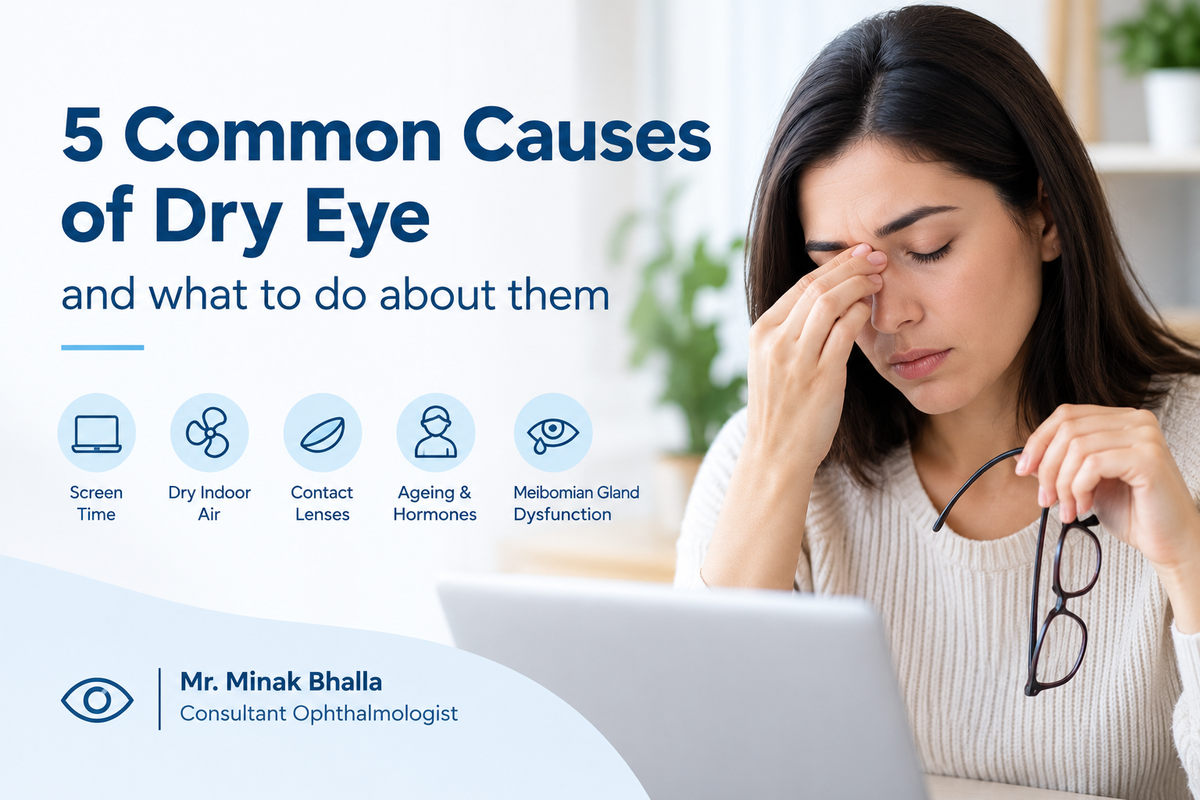
Meibomian gland dysfunction:-This is one of the leading causes of dry eye disease. It occurs when the oil-producing gland in the eyelids become blocked or do not function properly.
Aqueous tear deficiency:- This occurs when the lacrimal glands do not produce enough good quality tears to keep the eyes lubricated.
Blepharitis:-Blepharitis is inflammation of the eyelid margins. It affects the quality of tears, leading to eye irritation.
Autoimmune disorders:-Autoimmune disorders like Sjögren’s syndrome, rheumatoid arthritis and lupus may affect tear production and increase the risk of dry eye disease.
Allergic eye disease:-Seasonal and chronic eye allergies can cause inflammation and instability of the tear film contributing to dry eyes.
Who are more at risk of dry eyes:-
Age over 50 years
Wearing contact lens
Windy, dry and dusty weather
Prolonged exposure to computer screens
Air conditioned or heated environment
History of allergies
Why do dry eyes become worse in summer?
Several factors play a significant role in causing dry eyes in summer.
Exposure to the Sun and wind:
Spending more time outdoors can expose the eyes to warm air, wind and direct sunlight for long hours. This can increase tear evaporation and make the eyes feel dry and gritty.
Air-conditioning:
Air-conditioners can reduce moisture in the air. Prolonged exposure to air-conditioned environments at homes, cars or offices may cause faster evaporation of tears in people who already suffer from dry eyes.
Pollen and seasonal allergies:
Warm, dry and windy weather can spread pollen more easily and aggravate eye allergies. Summer allergies can irritate the eyes and cause redness, watering and itching in the eyes.
Swimming pools and chlorinated water
If there is presence of excessive chlorine and other chemicals in swimming pools,it can cause irritation to the surface of the eyes and temporarily disrupt the tear film, especially in contact lens wearers.
Tips to prevent dry eyes in summer:-
Knowing the causes of dry eyes can help you take some preventive measures during summer, which can significantly minimize the discomfort of dry eyes.
Stay hydrated:-
Drinking enough water throughout the day supports overall body hydration and may help maintain tear film health. While the direct link between hydration and tear production is not fully established, staying well hydrated is a simple and sensible measure to support ocular surface health, particularly during hot summer months when fluid loss is greater.
Wear sunglasses outdoors:-
Wearing wraparound sunglasses in the scorching heat outdoors can help protect the eyes from wind, sunlight and airborne irritants from all angles, helping to reduce irritation and slow tear evaporation.
Take breaks from screens:-
Taking breaks between prolonged use of the digital screen may reduce eye strain. Many people find the 20-20-20 strategy helpful. While using the screen for long hours, look at something 20 feet away every 20 minutes, for at least 20 seconds. Remember to blink more as well as it can help keep the eyes lubricated.
Limit direct exposure to air-conditioning:
Avoid sitting directly in front of fans and air-conditioning vents for long if possible.
Practise good contact lens hygiene:-
Maintaining good contact lens hygiene can help to reduce eye irritation and discomfort. Always clean your lenses thoroughly and store them in fresh sterile solution as directed. Avoid wearing contact lenses for a prolonged time in hot and dry weather.
Use artificial tears if recommended:-
Lubricating eye drops may help to reduce dryness of the eyes and relieve irritation. These drops are usually prescribed by experienced consultant ophthalmologists if necessary.
When to seek professional treatment for dry eyes:-
Dry eyes often improve with simple lifestyle modifications. But if the symptoms become more persistent and begin to affect daily activities, a consultation with a professional consultant ophthalmologist may be required for medical treatment.
Treatment of dry eyes:- In persistent and advanced cases, medical treatment may be necessary to resolve dry eyes.
Prescription eye drops:- Prescription eye drops can help to reduce inflammation in the eyes and stabilize the tear film. Lubricating eye drops are very commonly used to reduce dryness of eyes in simple cases of dry eyes.
Punctal plugs:- Punctal plugs are small devices inserted into tear drainage ducts of the eye to help retain moisture on the surface of the eye. Patients with significant tear deficiency may need it.
Meibomian Gland Expression:- This in-clinic procedure helps to clear blocked oil glands along the eyelids and may improve tear quality. It is a considerable treatment option to relieve symptoms of irritation and dryness.
Thermal pulsation therapy:- It is a treatment for meibomian gland dysfunction, one of the leading causes of dry eyes. It uses controlled heat and gentle pulsation to unblock the oil glands and improve the tear film.
Intense pulsed light therapy:- This procedure uses carefully controlled pulses of light applied to the skin around the eyelids. It helps to reduce inflammation and improve function of oil-producing glands.
Professional Eye Care in Marylebone, London to help you get rid of dry eyes in this Summer
If your dry eyes are still persistent after the right preventive measures, and you're looking for quality treatment for the trouble of dry eyes in summer, arrange a consultation with Dr. Minak Bhalla, a consultant ophthalmologist in Marylebone, London. With over 10 years of experience, Dr. Bhalla offers Meibomian gland dysfunction therapy, recurrent corneal erosion treatment and dry eye care in London to help your eyes regain its natural hydration. Contact us for further enquiries.