Cataract
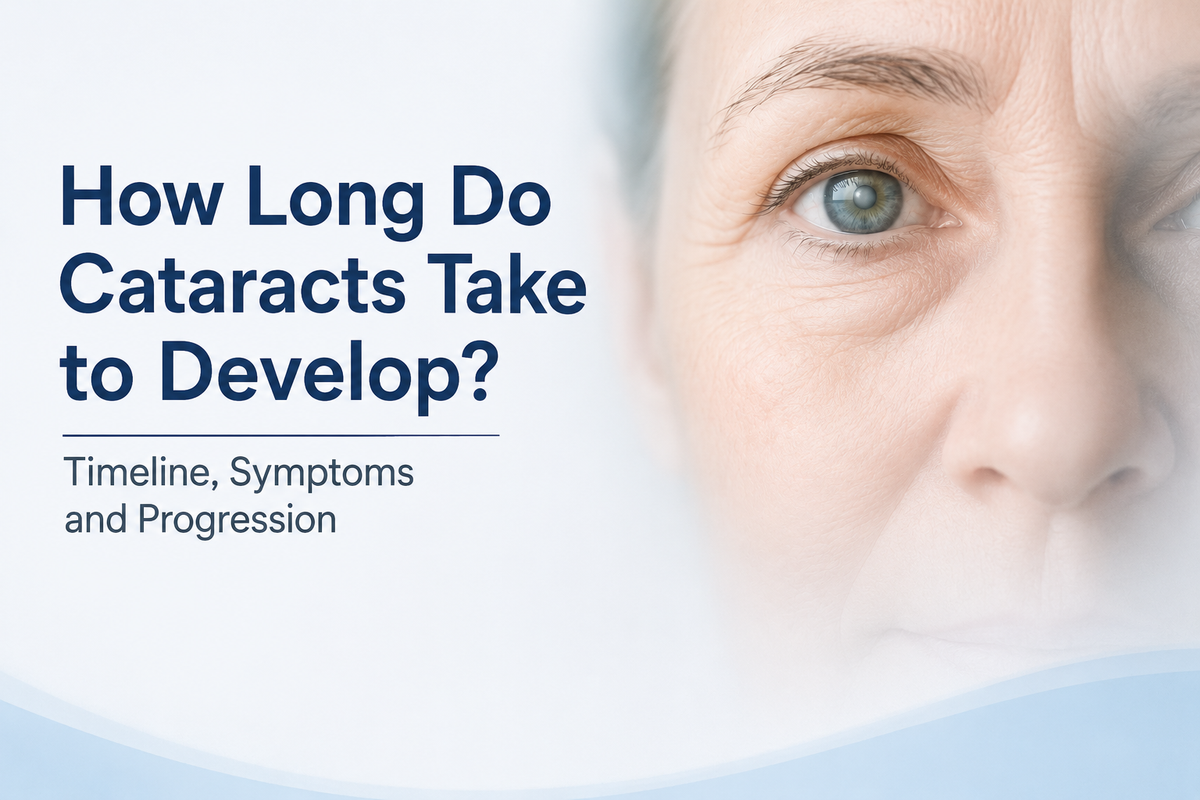
How long do cataracts take to develop-Timeline, symptoms and progression

Dr Minak Bhalla
Is blurry vision getting in the way of your daily activities, making it harder to read, drive or recognise faces clearly? It can be the beginning of a cataract. Cataracts don't develop overnight. The cataract progression can happen gradually. In early stages, the symptoms may be subtle and go unnoticed. Early lens changes associated with ageing can begin from the age of 40–50 years, with clinically significant opacity typically developing from the 50s onwards and becoming increasingly prevalent beyond the age of 60.
What is Cataract?
A cataract is a common eye condition caused by clouding of the eye's natural lens. Cataracts are most common in older adults. It often begins with cloudy and blurry vision. It can occur in one or both eyes. If cataracts are present in both eyes, the vision problems may become more noticeable. If left untreated, cataracts may gradually lead to visual impairment.
Who is more at risk of developing cataract:
Older age ( particularly over 60 years)
strongly supported; prevalence of any cataract reaches up to 88% in the over-60 group across studies
Diabetes Mellitus
well-evidenced; approximately 4% of all cataracts are attributable to diabetes, with earlier onset in diabetic patients
Eye injury
Inherited health problems
Genetic and congenital factors, such as a positive family history, or maternal infections during pregnancy (e.g. rubella) causing congenital cataract
Overexposure of Ultraviolet light
World Health Organisation aligned guidelines recommend UV-B blocking eyewear
Tobacco use
well-supported, especially for nuclear cataract; smokers have approximately 1.17× higher odds vs non-smokers
Obesity
High myopia/nearsightedness
Long-term steroid use
Alcohol consumption — associated with all cataract types
Hypertension
Ionising radiation
Female sex — some evidence for higher prevalence, attributed to hormonal changes and other exposures, though data are mixed
Types of Age-Related Cataract
As we age, the lens inside the eye can gradually become cloudy, affecting vision. There are three main types of age-related cataract, each forming in a slightly different part of the lens:
1. Nuclear Cataract (most common with ageing)Forms in the centre of the lens. One curious early feature is a temporary improvement in reading vision, sometimes called "second sight", before vision gradually deteriorates.Common symptoms:- Blurred distance vision- Colours appearing dull, yellowed, or brownish- Gradual loss of contrast
2. Cortical Cataract Starts at the outer edges of the lens and slowly spreads inward.Common symptoms:- Glare from lights (especially when driving)- Sensitivity to bright light- Painless, gradual blurring of vision- Coloured halos around lights
3. Posterior Subcapsular Cataract Forms at the back of the lens and can progress more quickly than the other types.Common symptoms:- Glare and dazzle, particularly in bright light or oncoming headlights- Difficulty reading- Symptoms often more noticeable in sunny conditions
Most age-related cataracts affect both eyes, though one eye may be more advanced than the other.
How long cataract takes to develop
Cataract progression varies from person to person. For most people, age-related cataracts develop slowly over many years, often beginning with subtle changes in the 40s or 50s and gradually worsening over time.
Certain factors can speed up progression, including diabetes, smoking, prolonged UV exposure, long-term steroid use, and some underlying eye conditions.
Cataracts caused by an eye injury (traumatic cataracts) are different — they can develop rapidly, sometimes within days or weeks of a significant injury, or more gradually over months to years depending on the nature of the trauma.
There is no single timeline that applies to everyone. Regular eye examinations are the best way to monitor any changes and discuss treatment when the time is right.
Early Signs of Cataract
Cataracts develop gradually, and the early changes can be subtle. Look out for:
- Blurred or cloudy vision, as if looking through a dirty window
- Difficulty seeing at night or when driving after dark
- Increased glare or sensitivity to bright lights
- Halos or rings around lights
- Needing brighter light to read comfortably
- Colours appearing dull or washed out
- Frequent changes in your glasses or contact lens prescription
- Double or ghost images in one eye (this can also be a sign of other eye conditions — worth getting checked)
If you notice any of these symptoms, book a comprehensive eye examination.
Managing Early Cataracts
There is no eye drop, supplement, or medication that can reverse a cataract — surgery is the only way to remove one. However, if your cataract is mild and not yet affecting daily life, the following can help you see more comfortably in the meantime:
- Update your glasses or contact lens prescription — changes in your vision from a cataract may mean your current prescription is no longer optimal
- Wear UV-blocking sunglasses — reduces glare and may help slow cataract progression
- Improve your lighting at home — brighter, well-directed light makes reading and close tasks easier
- Anti-glare lenses — ask your optician about coatings that reduce glare from screens and artificial lighting
When cataracts start to affect daily activities such as reading, driving, or watching television, surgery becomes the recommended option — and it is one of the safest and most effective operations performed today.
Mature Cataract
At this stage the lens has become significantly cloudy, causing noticeable problems with everyday life. Many people find that reading, recognising faces, and getting around independently becomes difficult. Vision may appear heavily fogged or dimmed.
Symptoms at this stage include:
- Significant loss of visual clarity
- Difficulty reading or recognising faces
- Severe sensitivity to glare and bright lights
Management: At this stage, cataract surgery is recommended. The operation involves gently removing the cloudy lens and replacing it with a clear artificial lens. The procedure is safe and well-established, and the majority of patients experience a significant improvement in vision afterwards.
Hypermature Cataract
If a cataract is left untreated for a prolonged period, it can reach an advanced stage where the lens becomes severely clouded and begins to break down internally. The proteins within the lens can start to leak out, which may cause inflammation inside the eye and a rise in eye pressure — both of which require prompt treatment.
Symptoms at this stage may include:
- Severely reduced vision, sometimes limited to detecting light or hand movements only
- A visible white or milky appearance to the pupil
- Eye discomfort or irritation
- Marked difficulty with all daily activities
Management: Surgery is required as soon as possible. It is worth noting that advanced cataracts can be more technically complex to remove, which is one of the key reasons why early consultation with an ophthalmologist is so strongly recommended, treating a cataract earlier is safer and leads to better outcomes.
Consult a cataract surgeon in Harley Street, London
Wondering whether it may be the right time to get cataract surgery? You can arrange a consultation with Dr. Minak Bhalla, an ophthalmologist consultant surgeon in Harley Street, London for personalised treatment. As a cataract surgeon with over 10 years of experience in ophthalmology, Dr.Bhalla is dedicated to provide treatment tailored to your individual needs. We understand how cataract can affect your life and aim to help you navigate your journey to clearer vision.Contact us for further enquiries.